How Banner Printing Works: From Design to Delivery
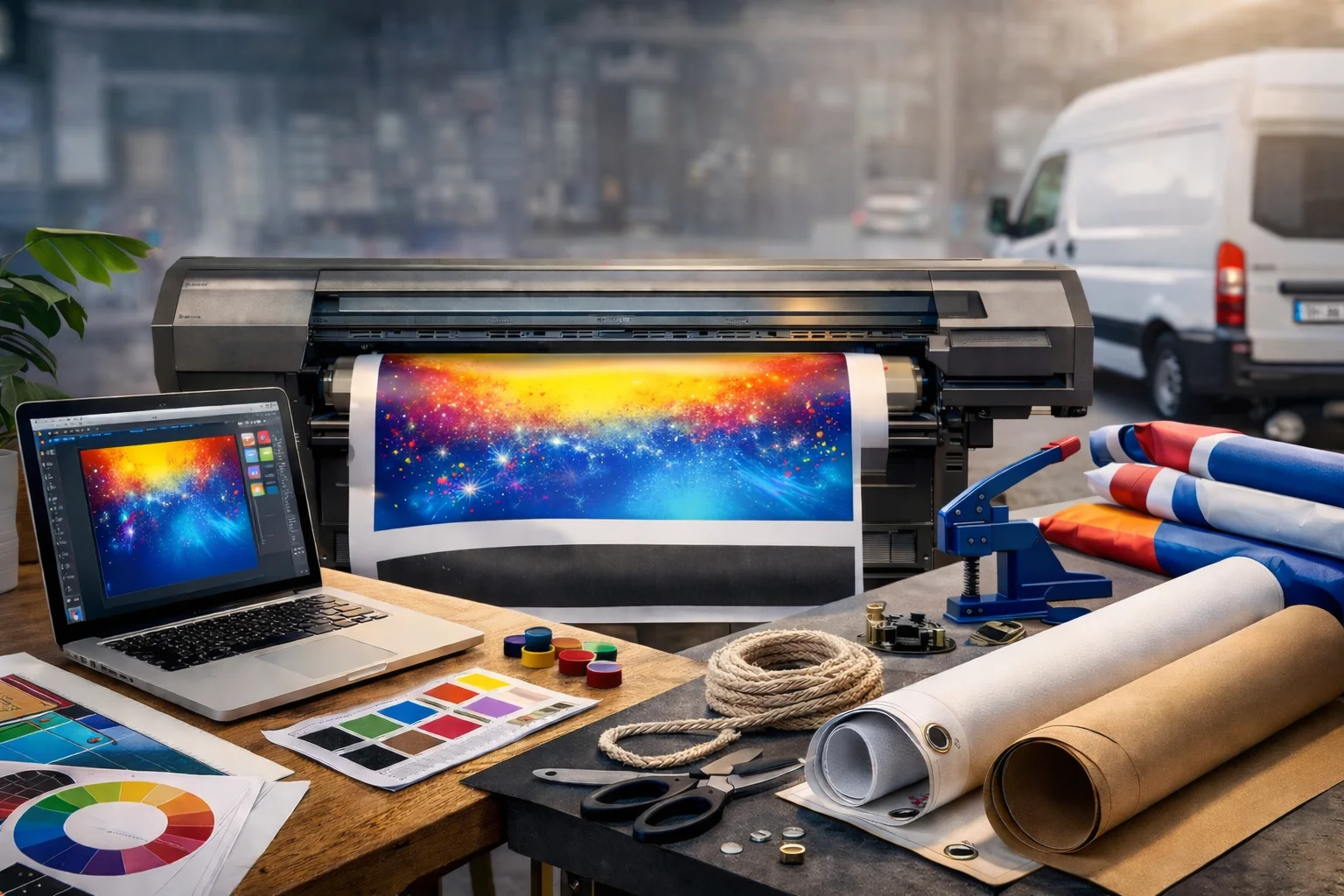
Learn how banner printing works in the UK, from artwork design and material selection to professional printing, finishing, and fast delivery.
Banner printing is an elaborate process which requires a plan, technical skills and special attention to quality. Most of the customers just view the finished banner without realizing that a number of crucial steps are involved in the background. The knowledge of these steps will allow you to select the correct banner and make expensive errors. At vinylbannersprint.co.uk, we are of the opinion that trust is created through transparency and improved outcomes.
All the stages affect the appearance, the strength, and the life of the banner, starting with first ideas and ending with final delivery. You may require a banner whether it is outdoor advertising, events or business promotion in the UK and knowing how it is done gives you assurance. Every step has to be planned to be clear, lasting and professional. Listed below is the explanation of banner printing in a simple, practical way to customers.
Step 1: Defining the Purpose of the Banner
The initial process of banner printing is to know the reason why the banner is required. The needs of a banner to use in the UK are not the same as in case of an indoor exhibition. Purpose influences the size, material and finishing options. Clear results will make the banner convey the appropriate message.
The customers are led to consider location, viewing distance and time in which to use it. As an illustration, short-term promotions might need other materials as compared to long-term displays. This step will avoid being over-paying or under-specifying on the banner. Planning will then save time and enhance performance.
Step 2: Choosing the Correct Banner Size
The right banner size will be necessary to be chosen to be visible and effective. A banner is either too small not to be noticed and a banner is too big to fit. The display size must be equal to the viewing distance and display area. This makes your message convenient to read.
Shopfronts, fences, or event areas tend to need custom sizes to meet the needs of UK customers. Before printing, errors in sizes are eliminated with the help of professional advice. True measures save on wastage and reprints. The appropriate size subsidizes the appearance and performance.
Step 3: Designing the Banner Artwork
One of the steps of the printing process is the designing of the banner artwork. A good banner will make your message easy to understand, read and attractive to the eye. Layout, fonts, and colours have to collaborate to get attention within a very short period. The even better quality of print can be diminished with poor design.
Customers should be encouraged to use text that is not too much and centered on the important information. Bright colours enhance the visibility particularly to outdoor UK banners. The logos and images must be high-resolution to prevent blurred images. A quality design will make your banner a mirror image of your brand.
Step 4: Selecting the Right Banner Material
It is necessary to select the right material of banners in terms of durability and performance. Various materials are meant to be used in different environments and applications. The use of vinyl banners is also common in the UK since the banners are waterproof and durable. Mesh and fabric banners have other advantages with regard to location.
The selection of material influences the way the banner will deal with the wind and rain, as well as the sunlight. Banners outside also need high quality material compared to those in the house. The customers will be directed depending on the location where the banner is to be displayed. The appropriate material guarantees higher value and life span.
Step 5: Preparing Artwork for Printing
Artwork has to be in its right state in order to be printed. This involves resolution and file format and colour verification. Poor quality files may lead to low quality prints. Essentials are prepared to prevent expensive errors and wastage of time.
Art is normally translated to CMYK color mode so that it can be printed accurately. Margins and areas of bleed are examined also. Such fine-tuning makes the design print at full size. The preparation of files ensures that the design is similar to the final banner.
Step 6: Large-Format Banner Printing
Banners are printed on a large scale, which is made at a professional level. Specialised printers use high quality inks that will evenly spread out on the material. The result of this process is sharp text and vivid colours. The accuracy of the printing produces a smooth and clean finish.
Various banner materials have a certain printer setting. The density and print speed of the ink is modified. UK outdoor banners are usually printed in UV resistant inks. This is a process to convert electronic designs into real banners.
Step 7: Drying and Ink Curing Process
Banners have to be dried/cured after printing. This enables the ink to have a good attachment with the banner material. Correct curing helps to avoid smudging and fading. This is important to outdoor banners that are affected by weather.
Hurrying up this phase may decrease the lifespan of banners. Colours are dried under control to make them last longer. It makes it more resistant to the rain and to the sun. Banner that is completely cured works better in the long run.
Step 8: Quality Control and Inspection
Before proceeding to the next stage, every banner is inspected. Alignment of the print, colour and quality of the surface are checked. All the defects are detected and eliminated. This makes the banner professionally acceptable.
Quality control helps customers to be kept off defective products. It will ensure that the banner is equivalent to the approved design. Uniformity of the whole print is confirmed. The approved banners are sent to finishing.
Step 9: Adding Finishing Options
Installation and use Banners are ready to be installed and used. Hemming, eyelets and reinforced edges are a few examples of common finishes. These enhancements make them stronger and easier to mount. It will depend on the way the banner will be displayed to give it the proper finishing.
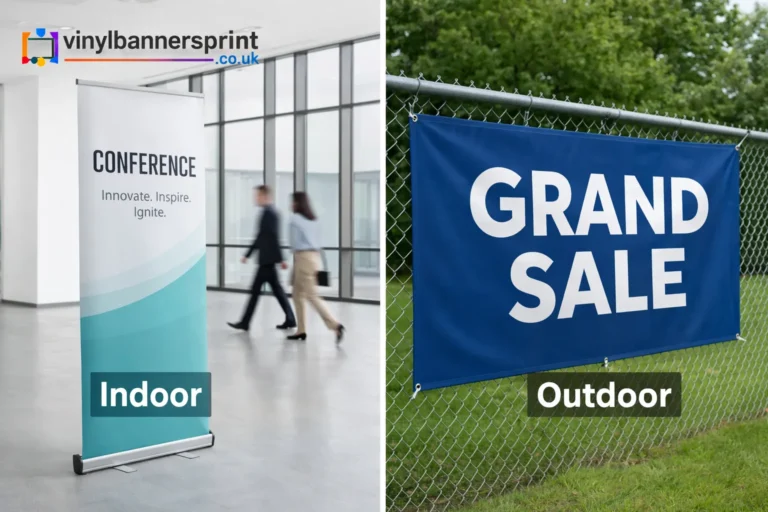
Banners placed outside the UK may need hems that are very powerful and metal eyelets. The indoor banners can require a more light finishing. The customers are guided on the most appropriate alternatives. Good finishing enhances usefulness and durability.
Step 10: Packaging and UK Delivery
Banners are then well packaged so that they are not damaged. Banners are rolled without creases and folds. The print surface is secure because of the protective materials. Safe packing means that the banner will be in an immaculate state.
Customer satisfaction requires reliable delivery. Goods are shipped within the UK through reputable courier services. In-time delivery will enable the use of banners on time. This is the last process in banner printing.
See Our Custom Banner & Sticker Printing Services
FAQs about How Banner Printing Works
Final Thoughts
It is possible to know the processes involved in banner printing to enable customers to make informed decisions. Every stage, such as the design of the artwork, and the last delivery, is significant to the quality of the completed banner. When all the steps are done professionally the output is a banner that is sharp looking and reliable. This experience enables customers to select the appropriate material, finishes and sizes to their requirements.
Professional banner printing does not only focus on putting ink on paper, but rather creating value and permanency. Good quality banners produce a serious visual impression and promote good marketing. When selecting a print service company in the UK that specializes in banners, quality and reliability of service delivery can be guaranteed. At vinylbannersprint.co.uk, we also aim at helping customers with all the processes to have the best possible outcomes.