Flex or Vinyl Banners: A Detailed Comparison Guide
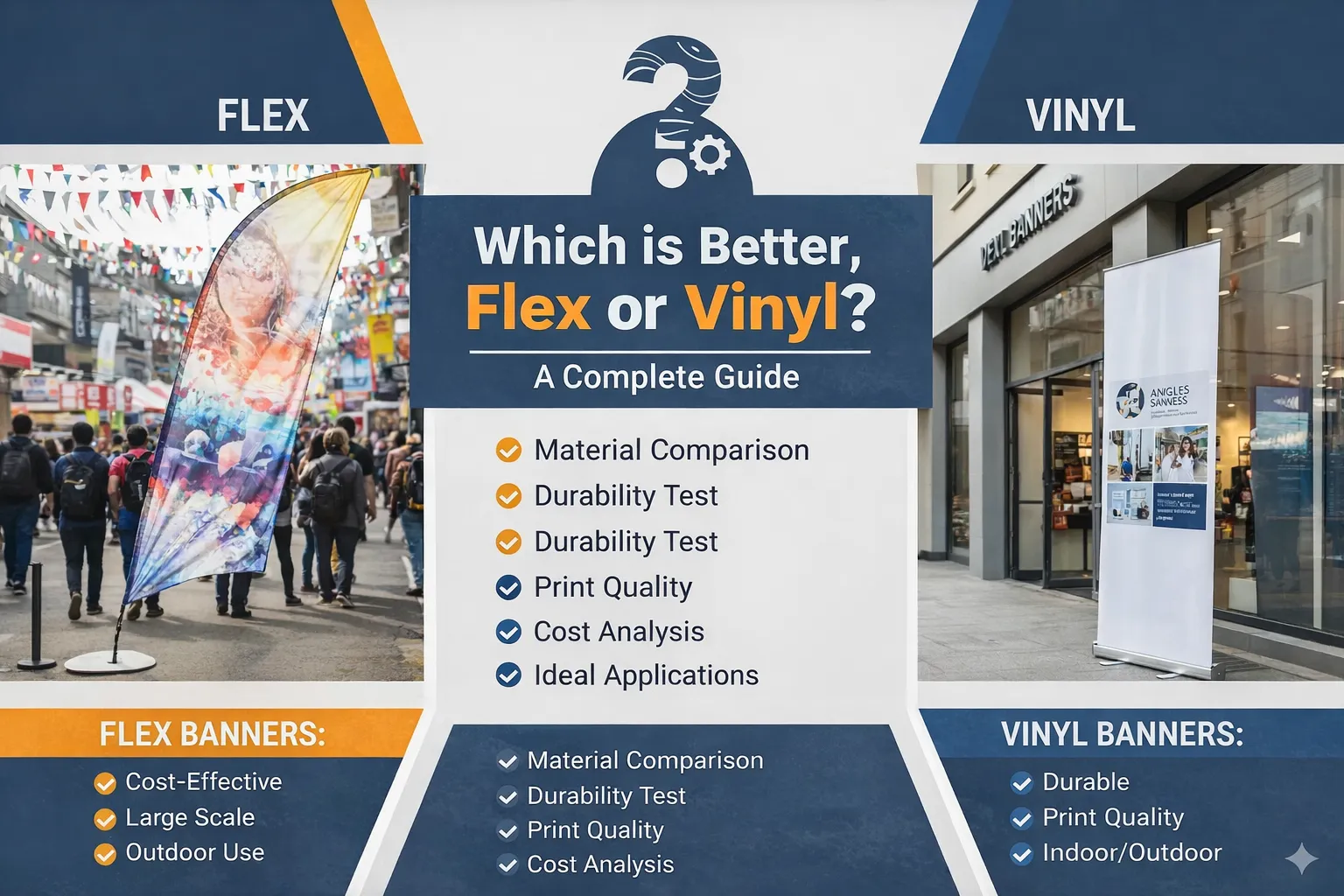
Discover which is better flex or vinyl banners, their uses, durability, cost, and printing tips to choose the best material for your signage needs.
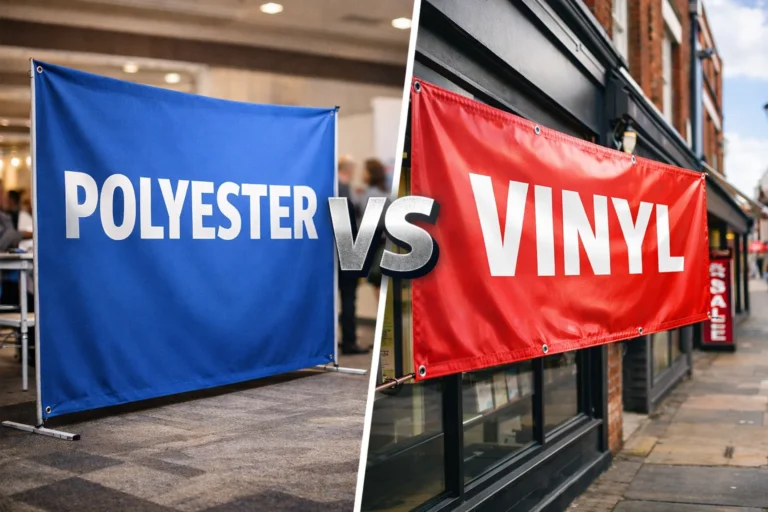
The selection of the material to be used in banners and signage is a key aspect of any business in UK that wants to create a good impact in terms of appearance. Flex and vinyl banner are two of the most widely used materials in the market which have their own characteristics. Flex is light, flexible and affordable, thus can be used in temporary campaigns and in the indoors. Vinyl, conversely, is tougher, weatherproof and has a smooth surface that can be printed on of high quality, ideal in the long-term outdoor signage.
The choice of flex or vinyl banner is influenced by various factors such as financial aspect, durability and quality of printing. Businesses will have to think over the place where the banner will be placed and the duration it will require. Knowing the distinction of these materials can help save time, money and qualify your signage to look professional. This article will also take you through the whole flex and vinyl so that you can make an informed decision.
Understanding Flex Material
Flex or flex banner material is a sort of synthetic polymer that is commonly used in printing of huge banners, billboards, and even promotional displays. It is produced out of PVC (polyvinyl chloride), and is characterized by its lightweight structure, flexibility and low price.
Key Features of Flex:
Lightweight and Flexible – Flex is simple to roll, carry and set up without the need of heavy machinery.
Cost-Effective – Flex banners tend to be less expensive than vinyl, which would be suitable in case of a short-term or temporary advertisement.
Weather Resistance – Flex material cannot withstand heavy weather conditions such as rain and sunlight but can withstand moderate weather conditions such as rain and sunlight in the short term.
Easy to Print On – Flex can be printed in full-color in digital with bright colors, which is applicable in bold images.
Flex is however more likely to tear and fade on the long run, particularly when subjected to harsh weather conditions.
Understanding Vinyl Material
Vinyl also known as PVC vinyl is a heavier and stronger type of material that is usually used in high quality banners, vehicle wraps as well as long term outdoor signage. Vinyl is a good material to use due to its high strength, durability, and ability to resist environmental stress.
Key Features of Vinyl:
Durable and Long-Lasting – Vinyl banners are long term as they can endure several years without much damage.
Weatherproof – Vinyl is much resistant to rain, UV rays, and wind as compared to flex. It is best in permanent outdoor exhibitions.
Smooth Printing Surface – The smooth printing surface enables sharp image and text printing of high resolution.
Professional Appearance – Vinyl tends to appear more professional and your signage will have a long-lasting professional finish.
The primary disadvantages of vinyl include increased price and increased weight that can put strain on the support structures to install.
See Our Custom Banner & Sticker Printing Services
When to Choose Flex
Flex is a perfect option when a company or an event needs an advertising solution in the short run or temporary basis. Its light weight makes it portable, rollable and can be installed without special tools. Flex banners are also cheaper than the vinyl and therefore can be used in projects with a very tight budget. Furthermore, flex can be applied not only indoors but also outdoors, but the durability of this material can be affected by extreme conditions and result in fading or tearing.
The other benefit of flex is that it comes in different designs and sizes, and it is therefore widely used in exhibitions, trade show, and promotional campaigns in UK. Flex is a very popular choice among businesses that have to replace their advertising or marketing materials on a regular basis. Nonetheless, flex might be not as durable to resist the pressure of the environment in case of high-end and long-term displays. Altogether, flex suits short-term and low-budget applications and lightweight ones.
When to Choose Vinyl Banner
The choice of material used in long-lasting and professional signages is vinyl. It is very durable and therefore banners can survive years of sun, rain and wind. The smooth surface features of the vinyl make sure that printing is done in high-resolution so that the images are sharp and the colors are vivid and catchy. That is why vinyl is especially appropriate in permanently placed outdoor billboards, front office signs and high profile advertising campaigns.
Vinyl is costlier than flex but the cost is compensated by the durability and high quality look. It is also durable enabling it to support bigger sizes of banners without the threat of tearing or collapsing. Companies that want to develop a high-quality and professional brand image usually use vinyl, as it does not deteriorate with time. Vinyl is also a good material in serious advertising since it is long lasting and high quality in terms of visuals.
Printing and Installation Considerations
When printing on flex and vinyl, one should take good precautions to attain the best. Flex banners have a textured surface, which makes them ideal to print in full color with digital technology, but not to reproduce very fine details as well as vinyl. Vinyl, however, is smooth and can be printed in high resolutions, and so it is best used in detailed graphics and professional display. The two materials enjoy the advantage of high quality inks to ensure colorful colors which will not fade away with time.
These materials also differ in their installation. Flex is light, simple to install on some temporary frames, walls or poles and is therefore suitable in temporary activities. Vinyl is heavier and therefore it needs to be supported properly either with grommets or frames to avoid sagging or wind damage. Both materials can be laminated to provide further protection against the UV rays and environmental damage. During installation, the care gives the impression of a clean, professional look that is long-lasting.
Cost Considerations
One of the most important elements in making the flex and vinyl decision is cost. Flex tends to be cheaper and is thus more favored in the short term campaigns, events and promotion across UK which are frequently changed. It is also light in nature thus minimizing shipping and installation expenses. The affordability of flex enables it to be a good alternative to small organizations or businesses with a small marketing budget.
Vinyl is more costly in the short-term, but in the long-term, it has a good value owing to its durability and high appearance. Its high price is compensated by the fact that it can survive years of outdoor exposure without the need to be replaced. Companies that invest in permanent signage would also realize that in the long run, vinyl is cheaper, as it saves on maintenance costs and replacement costs. Finally, when it comes to material cost as well as lifespan, it will be possible to find out which one is more profitable in terms of investment.
FAQs about Which is Better, Flex or Vinyl
Final Thoughts
Finally, it is up to you to choose between flex and vinyl basing on your needs. Flex is a great option in case you need it temporarily and it is on a tight budget. But when you require a heavy duty, long lasting and durable solution, then go with vinyl. This knowledge of the strengths and limitations of each material will make you make an informed decision that will fit your advertising needs.